
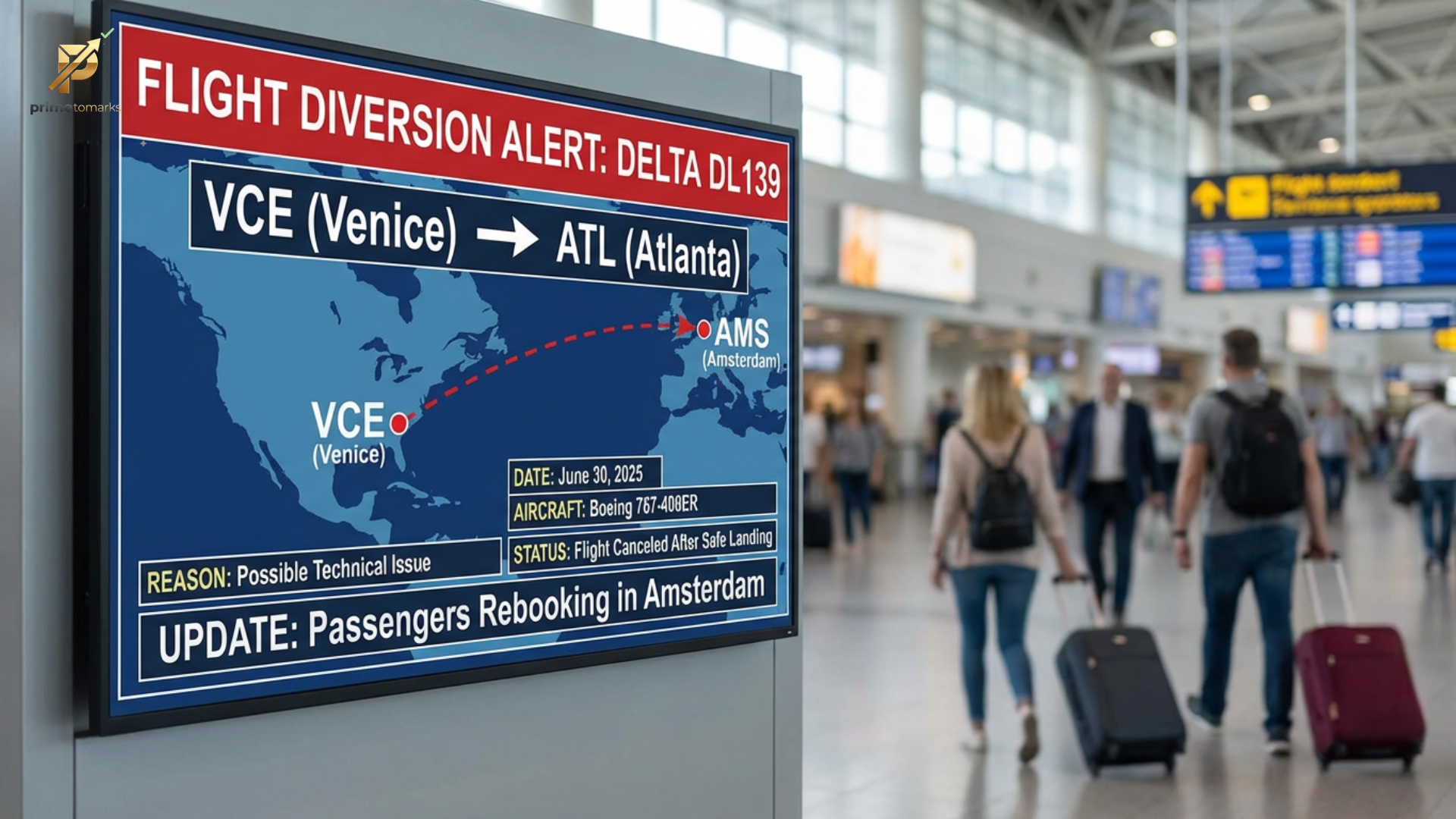
Introduction to Delta DL139 Flight
Diversion to Amsterdam
Mid-flight, a chime rang over the speakers, drawing everyone’s attention. The lead flight attendant, her voice steady but gentle, addressed the cabin: “Ladies and gentlemen, this is your inflight team. The captain has informed us that, out of an abundance of caution, we will be diverting to Amsterdam due to a technical issue. Your safety is our top priority, and we appreciate your understanding.” Passengers were initially puzzled by the announcement but soon understood that safety was paramount.
The plane touched down in Amsterdam’s Schiphol Airport, where flight crews efficiently managed the situation. As passengers stepped out of the aircraft, they were greeted by rows of orange-vested ground staff moving swiftly across the shiny floors, and the distant hum of engines winding down. The spacious terminal was alive with the sound of multi-lingual announcements echoing through the air, while glowing arrival boards flashed updates in a dozen languages. The airport buzzed with activity as travelers disembarked and others awaited information, each moment adding to the vivid memory of an unexpected stopover.
For some, this diversion became an unplanned adventure amidst their travels—an opportunity to briefly experience another city, albeit unintentionally. Others felt anxious about delays and uncertain connections.
Ground staff worked diligently to accommodate stranded passengers while ensuring everyone remained informed throughout the process. It was a moment that underscored how unpredictable air travel can be when unforeseen circumstances arise.
Passengers’ Experiences
Uncertain about her next steps, Helen took to social media. She posted about her “unexpected Amsterdam layover adventure” and, despite her nervousness, found humor in the quirky twists of travel. She received support from colleagues and friends online, helping her accept what she could not control.
Delta’s Response and Explanation
In a statement, Delta explained that the decision to divert was made after evaluating several specific factors affecting flight conditions, including the status of the hydraulic system warning, the availability and suitability of alternate airports, and the ability to ensure passenger and crew safety during continued flight. Delta emphasized that situations such as warning lights in the cockpit, potential loss of key systems, or even the possibility of medical emergencies are all considered when choosing to divert. They reiterated their commitment to prioritizing crew and passenger well-being over schedules in these scenarios.
Passengers were offered accommodations and support upon arrival in Amsterdam. Delta aimed to minimize disruption by arranging alternate travel plans for those affected.
Furthermore, the airline promised a thorough investigation into what transpired during the flight. Transparency was key as Delta sought to communicate openly with impacted travelers about their options moving forward.
The company’s swift action reflected its dedication not just to service but also accountability during unforeseen events like this one.
Similar Incidents and Safety Concerns
For instance, a flight from New York to London was diverted to Ireland when a passenger fell ill mid-air. Such events raise safety concerns and highlight the importance of quick decision-making by the crew.
Moreover, diversions are sometimes necessary for aircraft maintenance. A malfunction in-flight could lead pilots to prioritize landing safely over reaching their intended destination.
These experiences underscore that, while air travel is generally safe, unforeseen circumstances remind passengers of the complexities of aviation. Airlines must maintain rigorous training protocols for staff and ensure effective communication with passengers during such incidents. For travelers, the benefit of this training quickly becomes apparent in the first few moments of an unexpected event. For example, within minutes of a warning signal or diversion, passengers are met with clear, calm announcements from crew members who have practiced emergency scenarios countless times. Flight attendants can answer questions, provide reassurance, and smoothly coordinate travelers’ needs, such as directing them to gather their belongings or explaining safety procedures. This thorough preparation helps reduce confusion, fosters a sense of order, and allows passengers to feel supported and informed right from the outset of any disruption.
Lessons Learned and Changes Implemented by Delta
Training programs for crew members have been enhanced. Staff are now better equipped to handle unexpected situations with calmness and efficiency. This change aims to reassure passengers during crises.
Moreover, Delta is investing in technology upgrades to its flight monitoring systems. For example, if a new sensor detects a minor hydraulic irregularity mid-flight, the crew receives an instant alert with a clear recommendation. The pilots can then diagnose and resolve the issue within minutes, ensuring passenger safety and minimizing disruptions. These advancements will allow for quicker assessments of any potential issues, enabling more informed decisions mid-flight.
They have also established a dedicated team to analyze incidents such as the Venice-to-Atlanta diversion regularly. Learning from each event helps them continuously refine their policies and procedures.
Engaging with passengers post-incident has become a priority, too. Collecting feedback offers valuable insights into enhancing overall travel experiences amid unforeseen challenges.
Conclusion: Ensuring Safe Air Travel for Passengers
Delta’s quick response reflected its commitment to passenger welfare. They provided support and timely information during a challenging situation. This incident highlights the importance of clear communication in crisis management.
Similar incidents underscore ongoing safety concerns in aviation. Each event prompts airlines like Delta to analyze their procedures and implement necessary improvements. Passengers must understand that every measure taken aims at enhancing overall safety standards.
Ensuring safe air travel requires collaboration among airlines, regulatory bodies, and passengers. Awareness and preparedness can make all the difference in navigating unforeseen challenges while flying across continents. As you plan your next journey, have you considered how you would respond if your flight were unexpectedly diverted? Taking a moment to reflect on emergency procedures, travel flexibility, and personal preparation could help turn an unexpected situation into a manageable experience. What steps might you take before boarding to feel more confident, no matter where your path leads?
