
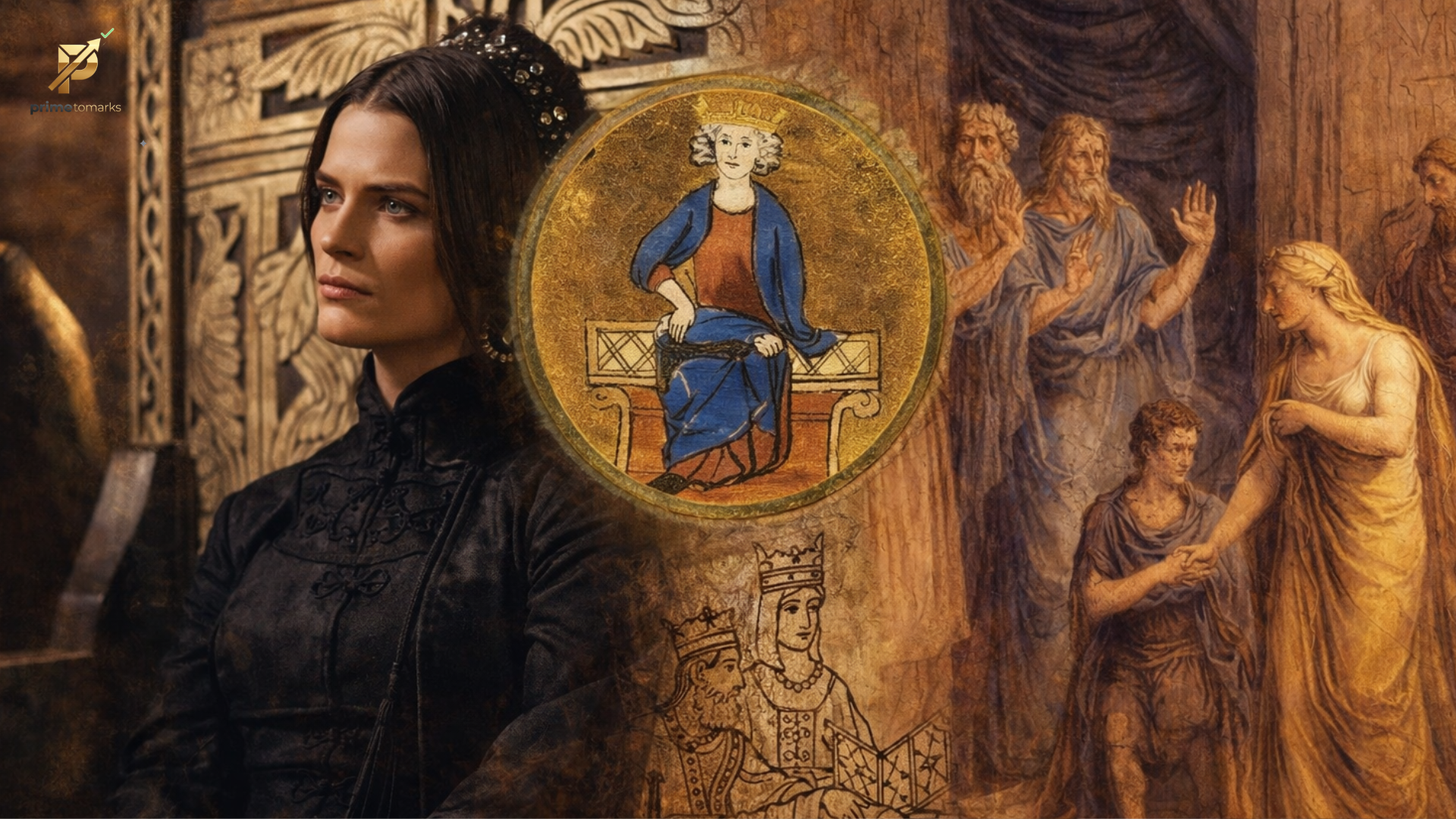
Emma of Normandy (c. 985 – 1052) was a pivotal figure in early medieval English and Scandinavian history, often recognized for her remarkable political resilience and influence as queen consort of two different English kings. Born into the powerful Norman ducal family, she was the daughter of Richard I, Duke of Normandy. Her life was characterized by strategic marriages that cemented alliances and shaped dynastic succession.
Her first marriage, in 1002, was to Æthelred the Unready, King of England. This union aimed to secure Norman support against Viking raids, particularly from Denmark. Despite bearing him two sons, Edward the Confessor and Alfred Aetheling, and a daughter, Goda, Emma’s time with Æthelred was tumultuous, marked by Danish invasions that eventually forced the royal family into exile in Normandy.
Following Æthelred’s death in 1016 and the subsequent conquest of England by Cnut the Great of Denmark, Emma made an extraordinary political maneuver. In 1017, she married Cnut, thus becoming Queen of England, Denmark, and Norway. This second marriage was crucial for Cnut, as it legitimized his rule over England and integrated him into the Anglo-Saxon lineage. At the same time, for Emma, it safeguarded her status and the future of her children, although her sons by Æthelred were largely sidelined in favor of her son with Cnut, Harthacnut.
Emma remained a powerful and influential queen throughout Cnut’s reign, and after he died in 1035, she played a significant role in the succession struggles that followed. She actively supported her son Harthacnut, even serving as a regent for a period. In her later years, she witnessed the restoration of the Anglo-Saxon line with her son, Edward the Confessor, though their relationship became strained. Emma of Normandy stands out as a formidable and intelligent woman who navigated the complex political landscape of her era with skill and determination, leaving an indelible mark on English history.
