
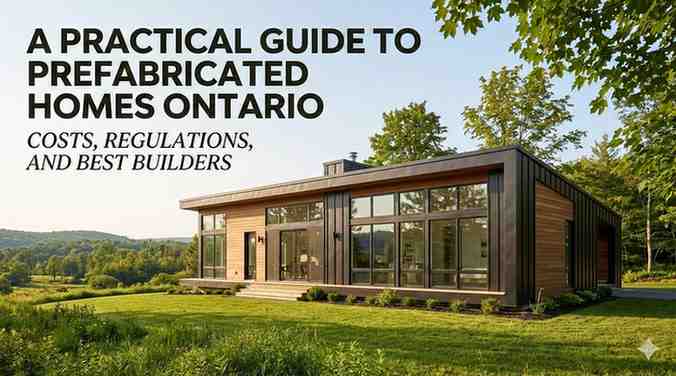
You can get a high-quality, energy-efficient home in Ontario faster and often for less money than a traditional build. Prefabricated homes Ontario combine factory precision, provincial code compliance, and flexible designs so you can move from concept to occupancy with fewer delays and predictable costs.
This article shows what types of prefab options are available, how they meet Ontario building standards, and what to expect when buying and living in one—so you can decide if a modular, panelized, or cottage-style prefab fits your needs and lot. Explore practical steps, timelines, and common considerations to help you plan confidently and avoid surprises.
Prefabricated Homes in Ontario: Overview and Types
You’ll find factory-built components, faster site assembly, and a range of floor plans and materials that meet Ontario building standards. Expect options from compact single-module cottages to multi-module family homes with engineered guarantees.
Definition and Key Features
A prefabricated home arrives with major components built in a factory and assembled on your lot. Key features include controlled indoor construction to reduce weather delays, professional engineering to meet Ontario Building Code requirements, and factory quality checks that cut onsite labour time.
You should expect warranties and documented inspections from reputable builders. Typical delivery includes modules or panels, certified structural drawings, and a list of required site works like foundation, utility hookups, and permit approvals.
Popular Prefab Home Designs
Common designs in Ontario range from small single-module cottages (300–800 sq ft) to multi-module two- to three-bedroom family homes (900–2,200+ sq ft). Builders often offer modern box-style bungalows, Craftsman-inspired layouts, and multi-story modular plans that stack modules for second floors.
You’ll see open-plan living, kitchen islands, and energy-efficient window packages as frequent inclusions. Many builders publish standard floor plans you can customize for finishes, closet layouts, and HVAC systems.
Modular vs. Manufactured Homes
Modular homes consist of multiple engineered modules built to the Ontario Building Code, assembled on a permanent foundation, and treated like site-built homes for permitting and resale. Manufactured homes are typically built on a steel chassis, follow the national CMHC or federal standards, and may be classified differently for financing or land lease situations.
For your project, choose modular if you want standard mortgage financing and easier resale. Consider manufactured only when you need lower upfront costs and a lot that accepts chassis-based homes.
Sustainable Construction Materials
Prefabricated builders in Ontario commonly use materials that improve thermal performance and reduce waste. Look for insulated structural panels (SIPs), high-performance fiberglass or triple-glazed windows, and formaldehyde-free engineered wood products.
You can ask builders for options like reclaimed wood accents, low-VOC paints, and cold-climate heat pump systems. Also check for airtightness testing results and thermal bridge mitigation details to evaluate long-term energy performance.
Buying and Living in a Prefabricated Home in Ontario
You’ll need to navigate provincial building codes, local zoning, site work, and financing before move-in. Expect faster construction timelines than stick-built homes, but plan for permits, inspections, and site-specific costs.
Ontario Regulations and Building Codes
Ontario requires prefabricated homes to meet the Ontario Building Code (OBC) and local municipal bylaws. Your manufacturer’s designs must be OBC-compliant and stamped where required; municipalities may demand additional inspections or site-specific drawings.
You must obtain a building permit from the municipality where the home will sit. Permits typically require foundation plans, engineering for soil or slope conditions, HVAC and electrical layouts, and proof of compliance from the factory for each module.
If your site is in a conservation area, near shorelines, or on rural land with a septic system, expect extra permits and environmental reviews. Engage a local designer or permit expediter early to reduce delays.
Cost Breakdown and Financing Options
Total cost includes factory price, delivery, foundation, site work, permits, utility hookups, and installation labour. Factory-built components often lower labor costs, but site prep (grading, retaining walls, driveways, septic) can represent 20–40% of total budget.
Typical financing paths are construction-to-permanent mortgages, land-plus-construction loans, or manufacturer financing when available. Lenders require detailed bills of materials, production schedules, and proof of OBC compliance; shop lenders experienced with modular or prefab loans.
Ask builders for an itemized quote showing: factory cost, transport, craning, foundation, local trades, permit fees, and contingency. Keep a 10–15% contingency for unexpected site issues or municipal conditions.
Site Preparation and Installation Process
Begin with a geotechnical or soil test to define foundation type and drainage needs. Clear access for trucks and cranes and confirm utility locations before delivery to avoid costly delays.
Foundation options include full basements, crawlspaces, or slab-on-grade; your foundation contractor must match factory module anchors and tolerances. Coordinate timing: foundation complete, municipal inspections signed off, then module delivery and craning, followed by mechanical tie-ins and interior finishing.
Plan for a final municipal inspection and occupancy permit. During installation, expect on-site trades for sealing module joints, connecting plumbing, electrical, and HVAC, and completing finishes. Schedule quality checks at each milestone.
Reputable Prefabricated Home Builders
Choose builders with proven OBC-compliant models and local installation experience in Ontario. Look for companies that provide engineering stamps, transparent lead times (commonly 6–12 weeks after permits), and detailed warranties covering factory defects and installation.
Verify references and recent project photos, and ask for local municipal references to confirm permit and inspection record. Confirm who handles site coordination: some manufacturers manage full turnkey projects while others sell modules only, leaving site work to you.
Request a written build schedule and escalation path for delays or defects. Prefer builders that subcontract to licensed local trades and supply clear documentation for lenders and municipal reviewers.
